
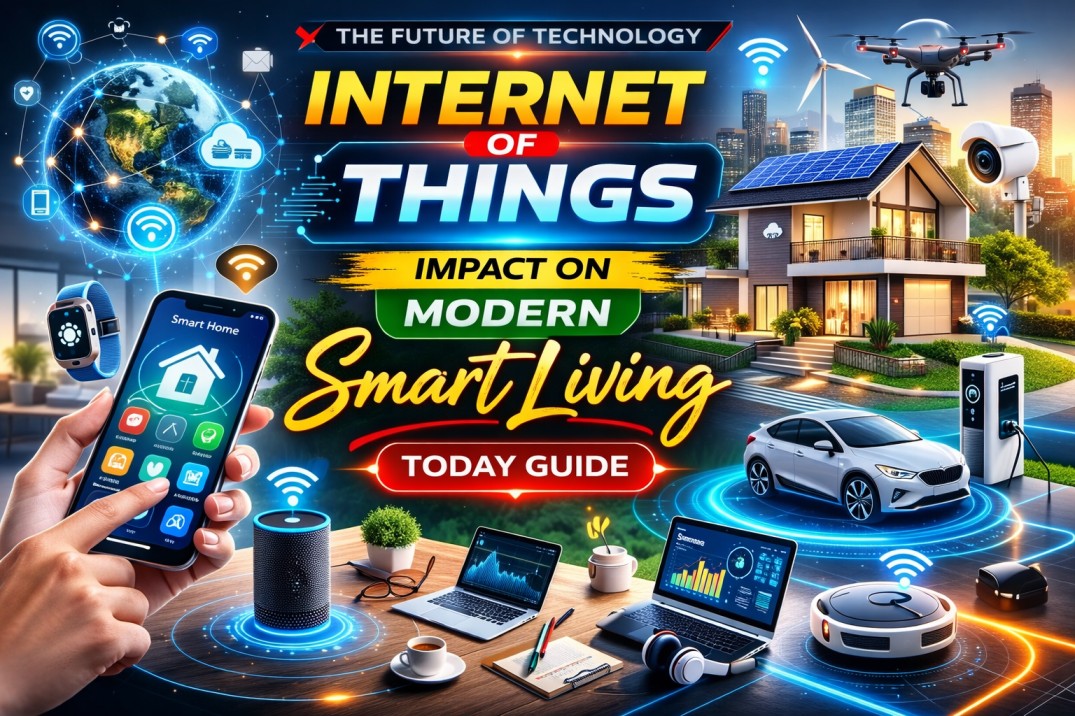
The Internet of Things (IoT) is one of the most transformative technologies shaping the modern world. It connects everyday devices to the internet, allowing them to collect data, communicate, and operate intelligently. From smart homes and wearable devices to industrial automation, IoT is revolutionizing how people live, work, and interact with technology.
This article explores how IoT works, its benefits, real-world applications, challenges, and its future role in creating smarter lifestyles.
What Is the Internet of Things?
The Internet of Things refers to a network of physical objects embedded with sensors, software, and connectivity that enable them to exchange data. These devices can include anything from smart thermostats and watches to factory machines and vehicles.
Technology companies such as IBM and Cisco develop IoT platforms that allow devices to communicate securely and efficiently.
In simple terms, IoT turns ordinary objects into smart systems that can think, analyze, and respond automatically.
How IoT Works
IoT systems operate through four main components:
-
Devices/Sensors – collect data from surroundings
-
Connectivity – sends data through networks
-
Data Processing – analyzes information
-
User Interface – displays results to users
For example, a smart thermostat detects room temperature, sends data to a cloud system, analyzes it, and adjusts settings automatically.
Benefits of IoT in Daily Life
IoT technology offers many advantages that make life easier and more efficient.
Convenience
Smart devices automate tasks like turning off lights, adjusting temperature, or locking doors.
Efficiency
Connected systems optimize energy use and reduce waste.
Cost Savings
Automation lowers electricity bills and maintenance costs.
Safety
Smart cameras and sensors enhance security and monitor environments.
Time Saving
IoT eliminates manual tasks by performing actions automatically.
Smart Homes: The Most Popular IoT Application
Smart homes are one of the fastest-growing uses of IoT technology. These homes use connected devices to automate household functions.
Examples include:
-
Smart lighting systems
-
Voice assistants
-
Smart refrigerators
-
Automated security systems
-
Remote-controlled appliances
Homeowners can control everything from a smartphone, even when they are away.
IoT in Healthcare
Healthcare is being transformed by IoT through remote monitoring and real-time health tracking.
Medical IoT devices can:
-
Monitor heart rate and blood pressure
-
Track patient activity levels
-
Alert doctors in emergencies
-
Remind patients to take medication
This technology improves patient care and reduces hospital visits.
Industrial IoT
Industries use IoT to improve productivity and reduce downtime. Sensors installed in machines monitor performance and detect faults before breakdowns occur.
Industrial benefits include:
-
Predictive maintenance
-
Reduced operational costs
-
Increased production efficiency
-
Real-time monitoring
Factories equipped with IoT systems are often called smart factories.
IoT in Transportation
Transportation systems also benefit from connected technology.
Applications include:
-
Smart traffic signals
-
Vehicle tracking
-
Fleet management
-
Autonomous driving support
These innovations improve road safety, reduce congestion, and optimize travel routes.
Security Challenges in IoT
Despite its advantages, IoT also presents security concerns. Because devices are connected to networks, they can become targets for cyberattacks if not properly protected.
Common risks:
-
Unauthorized access
-
Data theft
-
Device hacking
-
Privacy breaches
Strong encryption, regular updates, and secure networks are essential for safe IoT use.
Future of IoT Technology
The future of IoT is extremely promising. Experts predict billions of connected devices worldwide in the coming years. Future developments may include:
-
Smart cities with automated infrastructure
-
AI-powered IoT systems
-
Advanced wearable technology
-
Intelligent transportation networks
-
Fully automated homes
As connectivity improves, IoT will become even more integrated into everyday life.
Why Businesses Are Investing in IoT
Companies invest in IoT because it helps them:
-
Reduce costs
-
Improve efficiency
-
Analyze customer behavior
-
Automate processes
-
Gain competitive advantages
Businesses that adopt IoT early can innovate faster and stay ahead in competitive markets.
Tips for Using IoT Safely
To use IoT devices securely, users should:
-
Change default passwords
-
Update device software regularly
-
Use secure Wi-Fi networks
-
Enable encryption features
-
Buy devices from trusted brands
Simple precautions can greatly improve device safety.
Conclusion
The Internet of Things is transforming modern living by connecting devices, automating tasks, and improving efficiency across homes, industries, and cities. It offers convenience, cost savings, and smarter decision-making, making it one of the most influential technologies of the digital age.
As IoT continues to evolve, it will reshape how humans interact with technology and the world around them. Those who understand and adopt this technology today will be better prepared for the smart, connected future ahead.
Leave a Reply