
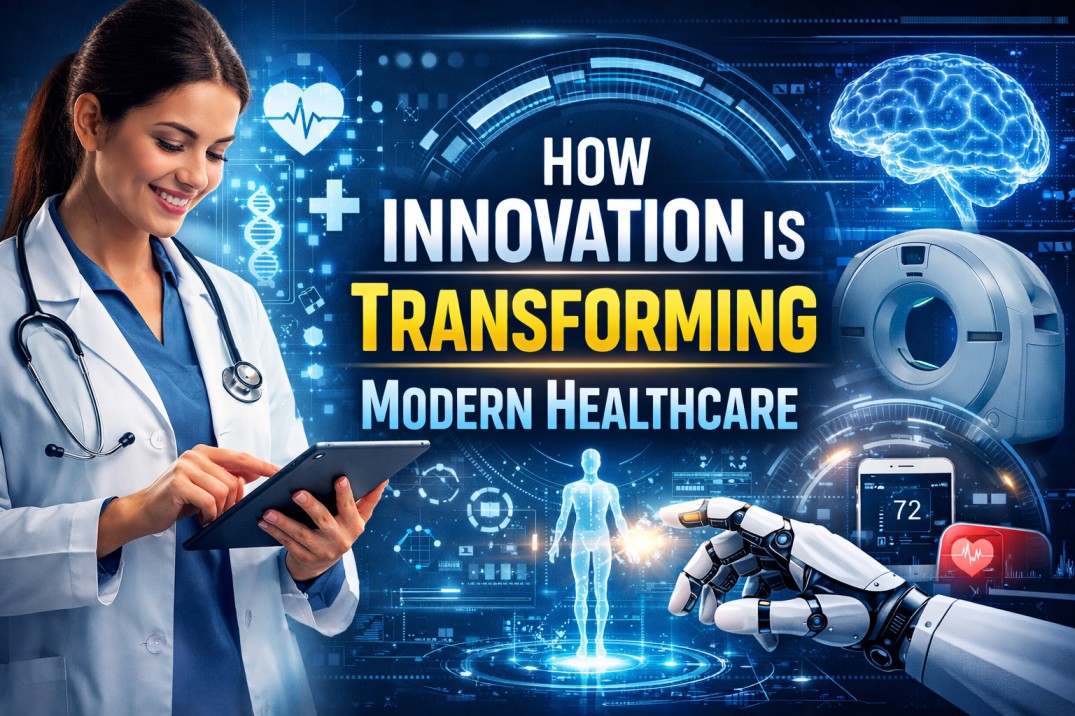
Technology has become one of the most powerful forces shaping modern healthcare. From AI-assisted diagnosis to wearable health monitors and robotic surgeries, digital innovation is redefining how diseases are detected, treated, and prevented. Today’s healthcare systems are shifting from reactive treatment models to proactive, personalized care powered by data, connectivity, and intelligent machines. This transformation is not only improving patient outcomes but also making healthcare more accessible, efficient, and affordable worldwide.
The Digital Transformation of Healthcare
Healthcare used to rely heavily on manual processes, physical records, and in-person consultations. Now, digital systems allow medical professionals to analyze patient data instantly, collaborate remotely, and deliver faster treatment decisions. Organizations such as the World Health Organization emphasize that digital health technologies are essential for strengthening healthcare systems and expanding care access globally.
Electronic health records (EHRs), cloud platforms, and data analytics tools enable doctors to view complete patient histories, reducing errors and improving diagnosis accuracy. Hospitals that adopt digital systems often experience shorter patient wait times, improved workflow efficiency, and better coordination among medical teams.
Artificial Intelligence in Diagnosis and Treatment
Artificial intelligence (AI) is one of the most revolutionary technologies in healthcare. AI systems can analyze vast amounts of medical data in seconds, identifying patterns that might take humans much longer to detect.
Key Applications of AI in Healthcare
- Medical Imaging Analysis: AI can detect abnormalities in X-rays, MRIs, and CT scans with remarkable precision.
- Predictive Analytics: Algorithms predict disease risks based on genetics, lifestyle, and medical history.
- Drug Discovery: AI accelerates research by analyzing chemical interactions and predicting effective compounds.
Major technology companies like Google are investing heavily in AI health research, developing systems capable of identifying eye diseases, cancers, and cardiovascular risks earlier than traditional methods.
Wearable Health Technology
Wearable devices have changed how people monitor their health daily. Smartwatches and fitness trackers can measure heart rate, oxygen levels, sleep quality, and physical activity in real time.
Companies such as Apple have integrated advanced health sensors into wearable devices, enabling users to detect irregular heart rhythms or monitor blood oxygen levels. These devices empower individuals to take charge of their health while also providing valuable data for physicians.
Benefits of wearable health technology include:
- Continuous health monitoring
- Early detection of medical issues
- Motivation for healthier lifestyles
- Remote patient supervision
For chronic conditions like diabetes or hypertension, wearable technology allows doctors to monitor patients remotely and intervene quickly if readings become abnormal.
Telemedicine and Remote Care
Telemedicine has revolutionized access to healthcare, especially for people living in remote or underserved regions. Through video consultations, messaging platforms, and remote diagnostic tools, patients can receive medical advice without traveling to hospitals.
Telemedicine offers:
- Faster consultations
- Reduced healthcare costs
- Greater accessibility
- Convenience for patients with mobility limitations
Hospitals such as Mayo Clinic have expanded telehealth services, enabling patients worldwide to consult specialists and receive expert opinions from home.
During global health crises, telemedicine proved essential in maintaining medical services while minimizing physical contact. Even beyond emergencies, it continues to reshape healthcare delivery.
Robotics in Surgery and Treatment
Robotic technology has enhanced surgical precision and reduced recovery times. Robotic-assisted procedures allow surgeons to perform complex operations using minimally invasive techniques.
Advantages of robotic surgery:
- Greater precision and control
- Smaller incisions
- Less blood loss
- Faster healing
Robotic systems can also assist in rehabilitation therapy, helping patients regain mobility after injuries or strokes. These machines can guide physical exercises and track progress more accurately than traditional therapy methods.
Personalized Medicine Through Technology
Personalized medicine tailors treatment to each individual’s genetic profile, lifestyle, and environment. Advances in genomic sequencing and biotechnology allow doctors to understand how a patient’s body will respond to specific medications.
Technology enables:
- DNA analysis for disease risk prediction
- Customized drug prescriptions
- Targeted cancer therapies
This approach reduces trial-and-error prescribing and increases treatment effectiveness. Instead of using generalized treatment plans, physicians can design therapies optimized for each patient.
Smart Hospitals and Internet of Medical Things (IoMT)
The Internet of Medical Things (IoMT) connects medical devices, sensors, and hospital equipment through networks. Smart hospitals use this connectivity to automate processes and monitor patients continuously.
Examples of IoMT applications:
- Smart beds that track patient movement and vitals
- Connected infusion pumps that adjust medication automatically
- Real-time patient monitoring dashboards
These technologies improve patient safety and reduce the workload on healthcare staff. Automated alerts notify medical teams immediately if a patient’s condition changes.
Virtual Reality in Therapy and Training
Virtual reality (VR) is becoming an innovative tool in both treatment and medical education. In therapy, VR can help patients manage pain, anxiety, and phobias by immersing them in controlled environments.
VR is used for:
- Pain distraction therapy
- PTSD treatment
- Rehabilitation exercises
- Surgical training simulations
Medical students can practice procedures in virtual environments before operating on real patients, improving skill development and reducing risks.
Data Security and Ethical Considerations
As healthcare becomes more digital, protecting patient data is critical. Medical records contain highly sensitive information, making cybersecurity a top priority. Healthcare organizations must implement strong encryption, secure access systems, and strict privacy policies.
Ethical concerns also arise with advanced technologies, especially AI. Ensuring fairness, transparency, and accountability in automated decision-making is essential for maintaining trust between patients and healthcare providers.
Benefits of Technology in Healthy Treatment
The integration of technology into healthcare offers numerous advantages:
- Early Disease Detection: Advanced tools identify health issues before symptoms appear.
- Improved Accuracy: Digital diagnostics reduce human error.
- Faster Treatment: Automation speeds up processes.
- Cost Efficiency: Technology reduces operational costs.
- Global Access: Remote care connects patients with specialists anywhere.
These benefits collectively improve quality of life and extend life expectancy.
Challenges and Limitations
Despite its advantages, healthcare technology faces several challenges:
- High implementation costs
- Need for specialized training
- Data privacy concerns
- Infrastructure limitations in developing regions
Addressing these challenges requires collaboration between governments, healthcare providers, and technology companies.
The Future of Technology Driven Healthcare
The future of healthcare will likely include even more advanced innovations such as:
- AI-powered virtual doctors
- Nanotechnology drug delivery
- Brain-computer interfaces
- Predictive health analytics
Healthcare will increasingly shift toward prevention rather than treatment. Continuous monitoring and predictive systems will alert individuals to potential health risks long before illness develops.
Conclusion
Technology is transforming healthy treatment from traditional reactive care into a proactive, personalized, and data-driven system. Innovations such as AI diagnostics, wearable monitors, telemedicine, robotics, and smart hospitals are not only improving medical outcomes but also redefining how healthcare is delivered.
As technology continues to evolve, the integration of digital tools into healthcare will play a crucial role in creating a healthier, more connected world. The combination of medical expertise and technological innovation represents the future of treatment — one where care is smarter, faster, and tailored to every individual.
Leave a Reply