
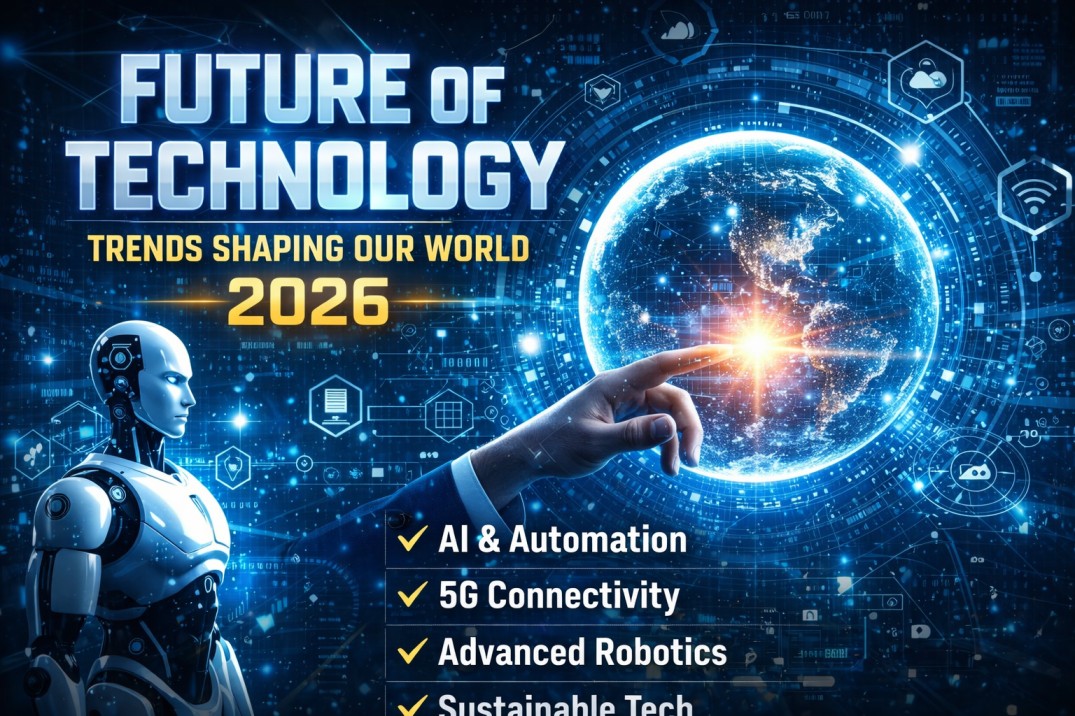
The year 2026 is expected to mark a major leap forward in technological innovation. Rapid advancements in artificial intelligence, automation, connectivity, and digital infrastructure are transforming how people live, work, communicate, and solve global challenges. Technology is no longer just a tool it is becoming an intelligent partner that supports decision-making, improves productivity, and enhances everyday life.
This article explores the most important technology trends shaping the world in 2026 and explains how these innovations will influence businesses, education, healthcare, and society as a whole.
The Rise of Artificial Intelligence Everywhere
Artificial Intelligence continues to dominate global technology trends. By 2026, AI systems will be deeply integrated into daily life, from voice assistants and recommendation engines to advanced decision-making software.
Companies like OpenAI are leading the development of intelligent systems that can understand language, generate content, analyze data, and automate complex tasks. AI will not only support humans but also collaborate with them in workplaces, schools, and industries.
Key Impacts of AI
-
Smarter automation in industries
-
Personalized online experiences
-
Faster scientific discoveries
-
Improved customer support
-
Real-time language translation
AI will become more accurate, faster, and safer, making it one of the most powerful technologies of the decade.
Expansion of 5G and Next-Gen Connectivity
High-speed internet is the backbone of modern technology. By 2026, 5G networks will be widely available, enabling faster communication, lower latency, and stronger connectivity. This will support technologies such as smart cities, autonomous vehicles, and remote healthcare.
Faster connectivity allows devices to communicate instantly, making systems more responsive and efficient. Businesses will benefit from real-time analytics, while consumers will experience smoother streaming, gaming, and communication.
Smart Cities and Intelligent Infrastructure
Cities worldwide are becoming smarter through technology integration. Smart traffic lights, digital surveillance, automated waste management, and energy-efficient buildings are transforming urban life.
Smart cities rely on sensors, data analytics, and automation to improve public services. Benefits include:
-
Reduced traffic congestion
-
Lower energy consumption
-
Improved public safety
-
Efficient transportation systems
Governments investing in smart infrastructure will provide citizens with safer and more sustainable environments.
Internet of Things (IoT) Expansion
The Internet of Things continues to grow rapidly. By 2026, billions of connected devices will communicate with each other, creating intelligent ecosystems. Smart homes, wearable devices, connected vehicles, and industrial sensors will become standard.
IoT allows machines to collect and analyze data automatically, enabling predictive maintenance, energy efficiency, and improved convenience. Homes will adjust lighting, temperature, and security settings without manual input, while industries will monitor equipment performance in real time.
Automation and Robotics Revolution
Automation is reshaping industries by reducing manual labor and increasing efficiency. Robots are already used in manufacturing, healthcare, logistics, and agriculture. By 2026, advanced robots will handle more complex tasks requiring precision and intelligence.
Innovators like Tesla are developing autonomous systems that combine robotics and AI to improve transportation and manufacturing. Automation will help businesses reduce costs, increase productivity, and maintain consistent quality.
Cloud Computing and Digital Transformation
Cloud computing remains a major driver of technological change. Companies are shifting from physical infrastructure to cloud-based systems for storage, software, and processing power. This trend will accelerate in 2026 as businesses demand flexibility and scalability.
Benefits of cloud technology include:
-
Remote access to data
-
Reduced hardware costs
-
Faster deployment
-
Improved collaboration
-
Automatic updates
Digital transformation powered by cloud systems enables organizations to innovate faster and compete globally.
Cybersecurity Becomes a Top Priority
As technology advances, cyber threats also become more sophisticated. By 2026, cybersecurity will be one of the most critical areas of investment for governments and businesses. Protecting data, networks, and digital identities is essential for maintaining trust in digital systems.
Security technologies will increasingly use AI to detect suspicious behavior, predict attacks, and respond automatically. Strong cybersecurity frameworks will be necessary to support safe digital growth.
Augmented Reality and Virtual Reality Growth
Augmented Reality (AR) and Virtual Reality (VR) technologies are moving beyond gaming and entertainment. In 2026, these immersive tools will play major roles in education, training, healthcare, and remote collaboration.
Examples of AR/VR applications:
-
Virtual classrooms
-
Remote medical training
-
Digital product demonstrations
-
Interactive simulations
These technologies will create realistic digital experiences that enhance learning and communication.
Wearable Technology Evolution
Wearable devices such as smartwatches and health trackers are becoming more advanced each year. By 2026, wearables will monitor health conditions, track fitness metrics, and provide real-time alerts for potential medical issues.
Tech manufacturers like Samsung are developing wearable devices that combine style, functionality, and advanced sensors. These tools will empower users to take control of their health and lifestyle.
Green Technology and Sustainability Innovation
Environmental concerns are pushing technology companies to develop sustainable solutions. Green technology focuses on reducing pollution, conserving energy, and protecting natural resources.
Future innovations will include:
-
Renewable energy systems
-
Electric transportation
-
Smart energy grids
-
Eco-friendly materials
Technology will play a crucial role in addressing climate challenges and promoting sustainable living.
Human Technology Collaboration
One of the biggest shifts in 2026 will be how humans interact with technology. Instead of replacing people, modern systems will enhance human abilities. AI assistants, smart tools, and automation platforms will support workers in performing tasks faster and more accurately.
This collaboration will create new job opportunities, especially in fields such as:
-
Data science
-
AI development
-
Robotics engineering
-
Cybersecurity
-
Digital marketing
Future workplaces will combine human creativity with machine intelligence.
Challenges of Future Technology
While technological progress brings many benefits, it also presents challenges that must be addressed.
Common concerns include:
-
Data privacy risks
-
Job displacement due to automation
-
Ethical issues in AI
-
Digital inequality
-
Overdependence on technology
Governments, organizations, and developers must work together to ensure responsible innovation.
Preparing for the Future
To stay competitive in a rapidly evolving world, individuals and businesses must adapt to technological changes. Preparing for future trends involves:
-
Learning digital skills
-
Understanding emerging technologies
-
Investing in innovation
-
Staying updated with tech news
-
Adopting flexible strategies
Those who embrace change early will benefit the most from future advancements.
Conclusion
The technology trends shaping our world in 2026 will redefine how society functions. From artificial intelligence and smart cities to robotics and sustainable innovation, technology is transforming every aspect of life. These advancements promise increased efficiency, better healthcare, smarter infrastructure, and new opportunities for growth.
Leave a Reply